
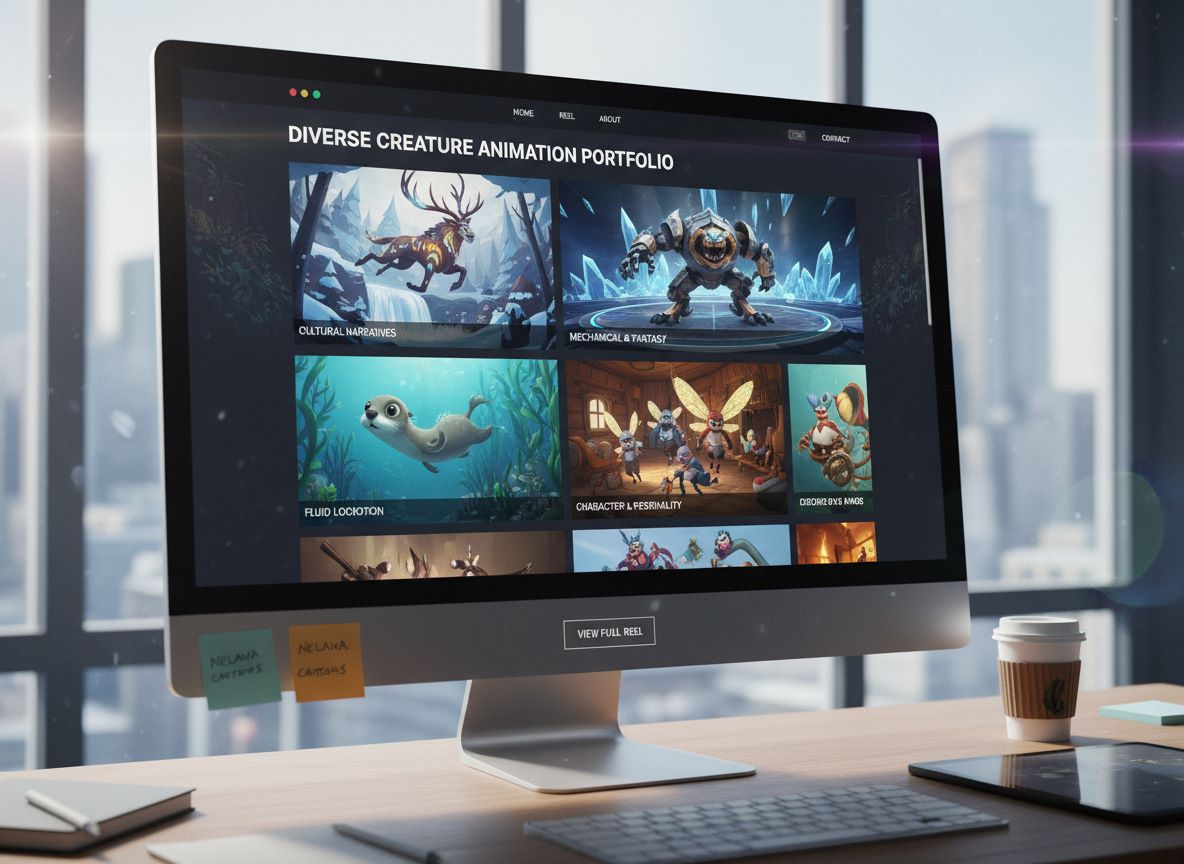
Canada’s creature animation industry is experiencing unprecedented growth, with powerhouse studios like Nelvana and WildBrain leading a creative renaissance that blends cutting-edge technology with rich cultural storytelling. Yet despite this booming market, over 80% of creature animation portfolios submitted to Canadian studios fail to meet their unique standards, often lacking the cultural sensitivity and technical innovation that define the country’s distinctive animation landscape.
Unlike their American counterparts, Canadian studios prioritize expressive creatures that seamlessly blend multicultural elements with nature-inspired designs, reflecting the nation’s diverse heritage and environmental consciousness. Success in this competitive market requires understanding not just technical excellence, but the cultural nuances that make Canadian creature animation distinctly authentic—a blueprint that transforms generic demo reels into career-launching showcases.
Understand Canadian Studio Expectations for Creature Animation
Most international portfolios fail to capture what Canadian studios truly seek: creatures that tell stories through cultural fusion and emotional depth. Nelvana consistently favors character designs that incorporate Indigenous storytelling elements alongside contemporary animation techniques, while WildBrain emphasizes creatures capable of expressing complex emotions through subtle facial animations and body language. Recent job postings from both studios reveal a strong preference for animators who understand how to balance traditional Canadian values with global market appeal.
The Canadian animation landscape demands creatures that feel authentic to diverse cultural backgrounds while maintaining universal relatability. Studios actively seek portfolios demonstrating understanding of Canadian environmental themes, from Arctic wildlife-inspired characters to forest creatures that reflect the country’s vast wilderness. This cultural intelligence separates successful Canadian creature animators from those who simply possess technical skills.
Key Skills Prioritized by Vancouver and Toronto Studios
Vancouver and Toronto animation hubs have distinct preferences that directly impact hiring decisions. Understanding these regional differences can significantly improve portfolio reception rates.
- Facial rigging expertise for micro-expressions, especially eye and brow animation systems
- Secondary animation skills for fur, feathers, and natural textures responding to environmental forces
- Cultural design sensitivity, particularly Indigenous and multicultural character representation
- Pipeline efficiency with Maya, Houdini, and studio-specific tools like Harmony
- Collaborative animation skills for episodic television production schedules
- Environmental storytelling through creature interaction with Canadian-inspired landscapes
Common Portfolio Pitfalls to Avoid
Generic creature reels immediately signal unfamiliarity with Canadian studio expectations. These common mistakes can eliminate otherwise talented candidates from consideration.
- Submitting only fantasy creatures without demonstrating versatility in realistic animal animation
- Ignoring Canadian cultural elements, showing lack of market research and cultural awareness
- Overlength demo reels exceeding 90 seconds, violating industry standard viewing preferences
- Missing breakdown materials that Canadian studios require for technical assessment
- Using outdated compression formats that don’t showcase animation quality properly
Research Top Canadian Studios and Their Creature Styles
Understanding individual studio aesthetics and project preferences allows for targeted portfolio customization. Each major Canadian studio maintains distinct creature design philosophies that reflect their brand identity and target audiences.
| Studio | Location | Notable Creature Projects | Portfolio Focus |
|---|---|---|---|
| WildBrain | Toronto | Sonic the Hedgehog, Inspector Gadget | Stylized creatures with exaggerated expressions |
| Nelvana | Toronto | Franklin the Turtle, Babar | Character-driven animals with emotional depth |
| Atomic Cartoons | Vancouver | Last Kids on Earth | Monster design with comedic timing |
| Bardel Entertainment | Vancouver | The Dragon Prince | Fantasy creatures with realistic movement |
| Mercury Filmworks | Ottawa | Cuphead Show | Traditional animation with modern creature design |
| DHX Media | Halifax | My Little Pony | Cute creature aesthetics with vibrant colors |
Tailoring Your Portfolio to Specific Studio Aesthetics
Successfully aligning creature designs with studio identities requires deep research into each company’s visual language and storytelling approach. WildBrain’s preference for bold, graphic character designs contrasts sharply with Bardel’s more naturalistic creature movements, requiring different demonstration approaches in portfolio pieces. Study recent projects from target studios to identify recurring design patterns, color palettes, and animation styles that define their creature work.
Create separate portfolio versions that highlight relevant skills for each studio’s aesthetic preferences. For Atomic Cartoons, emphasize comedic timing and monster design versatility, while Nelvana submissions should showcase emotional storytelling through creature animation. This targeted approach demonstrates market awareness and professional adaptability that Canadian studios highly value.
Consider the cultural context each studio operates within—Vancouver’s proximity to Asian markets influences creature design trends, while Toronto’s multicultural environment shapes character development approaches. Incorporating these regional influences into portfolio pieces shows understanding of the broader Canadian animation ecosystem beyond individual studio preferences.
Essential Elements of a Winning Creature Demo Reel
A compelling creature animation demo reel follows a strategic structure that immediately captures Canadian studio attention while demonstrating technical mastery. The opening five seconds must showcase your strongest creature animation work, as hiring managers often make decisions within this critical window. Each subsequent segment should build upon the previous demonstration, creating a narrative flow that keeps viewers engaged throughout the entire presentation.
Canadian studios specifically look for creatures that display personality through movement, requiring demo reels that balance technical prowess with emotional storytelling. Include diverse creature types—from realistic animals to stylized fantasy beings—to demonstrate versatility across different project requirements. Every animation clip should serve a purpose, whether showcasing facial expressions, full-body locomotion, or creature interaction with environments.
- Open with your strongest 10-second creature animation sequence featuring clear personality and technical excellence
- Demonstrate creature locomotion variety including quadrupedal, bipedal, and unique movement patterns
- Showcase facial animation capabilities with close-up shots emphasizing micro-expressions and emotional range
- Include creature-environment interaction scenes that display secondary animation skills and spatial awareness
- Present creature-to-creature or creature-to-character interaction demonstrating collaborative animation understanding
- Close with a memorable sequence that reinforces your strongest skillset and leaves lasting impression
Optimal Reel Length and Sequencing
Canadian studios consistently prefer demo reels under 60 seconds, with the optimal length ranging between 45-55 seconds for creature animation portfolios. This constraint forces animators to curate only their absolute best work while maintaining viewer engagement throughout the entire presentation. Every second must justify its inclusion through either technical demonstration or creative storytelling value.
Sequence timing should follow the 10-15-15-15 second formula: opening hook, locomotion showcase, facial animation demonstration, and closing memorable sequence. This structure allows sufficient time for each skill demonstration while maintaining pace that matches industry viewing habits and decision-making timelines.
Technical Specs for Canadian Submissions
Meeting technical requirements ensures your portfolio reaches hiring managers without playback issues or quality degradation. Canadian studios maintain specific standards that reflect their pipeline requirements and client delivery specifications.
| Format | Resolution | Frame Rate | File Size |
|---|---|---|---|
| H.264 MP4 | 1920×1080 | 24 fps | Under 50MB |
| ProRes 422 | 1920×1080 | 24 fps | Under 200MB |
| WebM VP9 | 1920×1080 | 24 fps | Under 30MB |
| QuickTime MOV | 1920×1080 | 24 fps | Under 75MB |
Creature Design and Modeling Best Practices
Successful creature design for Canadian studios requires balancing multicultural sensitivity with universal appeal, drawing inspiration from the country’s diverse natural environments and cultural heritage. Sheridan College’s creature design program emphasizes this approach, teaching students to incorporate elements from Indigenous art, Canadian wildlife, and contemporary global aesthetics into cohesive character designs. The key lies in understanding how cultural symbols and natural forms can enhance rather than stereotype creature personalities.
Canadian studios particularly value creatures that feel grounded in recognizable emotional experiences while maintaining visual distinctiveness. This means studying animal anatomy and behavior patterns from Canadian ecosystems—from Arctic foxes to prairie wolves—then abstracting these characteristics into designs that serve story requirements. The modeling process should emphasize clean topology that supports both realistic deformation and stylized exaggeration, allowing directors flexibility in animation direction.
Technical modeling standards in Canadian studios prioritize efficiency and pipeline compatibility over excessive detail density. Focus on creating creatures with modular design elements that can be easily modified for different episodes or scenarios, reflecting the episodic television production reality most Canadian studios operate within. This practical approach to creature design demonstrates industry readiness beyond artistic capability.
Rigging and Animation Techniques for Expressive Creatures
Advanced rigging techniques form the foundation of compelling creature animation, requiring deep understanding of both technical systems and organic movement principles. Canadian studios expect riggers who can create systems that support spontaneous creative decisions during animation while maintaining consistency across multiple episodes or sequences.
Secondary motion systems deserve particular attention in Canadian creature portfolios, as environmental storytelling plays a crucial role in many Canadian productions. Creatures interacting with snow, wind, rain, and seasonal changes require sophisticated rig controls that respond dynamically to environmental forces while maintaining character integrity.
- Implement layered facial rig systems with separate controls for micro-expressions and broad emotional displays
- Create dynamic secondary motion for fur, feathers, and skin that responds to character movement and environmental factors
- Design modular rig components that allow quick modifications for different creature variants or seasonal appearances
- Develop intuitive control interfaces that enable fast animation iteration during tight television production schedules
- Include breathing and idle animation systems that maintain creature life even during static scenes
- Build stretch and squash capabilities that support both realistic and stylized animation approaches
Showcase Principles: Breakdowns and Supporting Assets
Canadian studios require comprehensive breakdowns that demonstrate not just final animation quality, but the technical process and problem-solving approach used to achieve results. These supporting materials often determine hiring decisions more than demo reels alone, as they reveal an animator’s understanding of production pipelines and collaborative workflows. Effective breakdowns should balance technical detail with visual clarity, allowing both technical directors and creative supervisors to evaluate portfolio submissions.
| Asset Type | Include Breakdown? | Why for Canadian Studios |
|---|---|---|
| Facial Animation | Always | Shows emotional storytelling capabilities crucial for character-driven content |
| Locomotion Cycles | Yes | Demonstrates technical precision needed for episodic television production |
| Creature Interaction | Recommended | Proves collaborative animation skills essential for ensemble cast shows |
| Environmental Response | Yes | Highlights secondary animation skills valued in Canadian nature-themed productions |
| Rigging Systems | If Original | Showcases technical innovation sought by studios developing new pipeline tools |
| Concept Art | Optional | Demonstrates creative process understanding but may distract from animation focus |
Creating Effective Animation Breakdowns
Effective animation breakdowns reveal the layered complexity behind seemingly effortless creature movement, using graph editor screenshots, wireframe overlays, and step-by-step progression images to illustrate technical mastery. Canadian studios particularly value breakdowns that show how animators solve specific challenges—whether achieving convincing fur dynamics, creating believable creature-environment interaction, or developing efficient animation workflows that meet television production deadlines. These materials should tell the story of creative problem-solving as compellingly as the animation itself.
Structure breakdowns to highlight decision-making processes rather than just technical execution steps. Include brief explanations of why specific animation choices were made, how reference material influenced movement decisions, and what alternative approaches were considered during development. This narrative approach demonstrates the critical thinking skills that distinguish professional animators from talented students, particularly important for studios evaluating candidates for senior creative roles.
Visual presentation quality in breakdowns directly impacts professional perception, requiring the same attention to composition and clarity as demo reels themselves. Use consistent formatting, clear annotations, and logical progression that guides viewers through complex technical processes without overwhelming them with unnecessary detail. Remember that these materials may be shared across multiple departments, requiring accessibility for both technical and creative reviewers.
Portfolio Website vs. Vimeo/YouTube Strategies
Platform choice significantly impacts how Canadian studio recruiters discover and evaluate creature animation portfolios. Each option offers distinct advantages that align differently with industry viewing habits and hiring workflows.
- Personal portfolio websites provide complete creative control but require ongoing maintenance and SEO optimization
- Vimeo offers high-quality video compression and professional presentation but limits discoverability without external promotion
- YouTube provides maximum exposure potential but may be perceived as less professional by conservative studio cultures
- ArtStation integrates well with industry recruiting practices but requires strong still image support alongside video content
Build a Diverse Portfolio with Original and IP-Inspired Creatures
Balancing original creature designs with IP-inspired work requires strategic curation that demonstrates both creative innovation and industry adaptability. Canadian studios seek animators who can contribute fresh ideas to original productions while efficiently adapting to established property requirements for licensed content work. The key lies in presenting original creatures that feel commercially viable alongside IP work that shows respect for existing design languages while adding personal artistic interpretation.
Original creature designs should reflect global appeal while incorporating distinctly Canadian sensibilities, whether through environmental influences, cultural references, or storytelling approaches that resonate with Canadian audiences. These pieces prove creative capability and cultural understanding that studios value for original content development. Simultaneously, IP-inspired work demonstrates professional flexibility and market awareness, particularly important for studios balancing original productions with international co-productions and licensed property adaptations.
Portfolio diversity should span multiple creature categories—realistic animals, stylized characters, fantasy beings, and hybrid designs that could fit various production requirements. This range proves adaptability across different project types while allowing individual pieces to showcase specific technical or creative strengths. Canadian studios particularly appreciate creatures that could transition between realistic and stylized approaches, reflecting the industry’s need for flexible assets that serve multiple story requirements.
Project Ideas Tailored to Canadian Trends
Canadian animation trends increasingly emphasize environmental storytelling and cultural authenticity, creating specific opportunities for creature designers who understand these market directions. Successful portfolios anticipate industry needs while demonstrating cultural sensitivity and creative innovation.
- Arctic adaptation creatures inspired by Inuit mythology, showcasing environmental storytelling and cultural respect
- Forest guardian characters reflecting Canadian wilderness themes with realistic animal behavior foundations
- Urban wildlife designs that blend realistic city animals with fantastical elements for modern Canadian stories
- Seasonal transformation creatures that demonstrate advanced rigging and animation skills through environmental adaptation
- Multicultural fusion designs that respectfully combine elements from Canada’s diverse immigrant communities
- Climate-conscious creatures that address environmental themes relevant to Canadian educational and entertainment content
Leverage Education and Networking for Portfolio Polish
Canadian animation schools offer distinct advantages for creature animation specialization, with programs specifically designed to meet domestic industry requirements while maintaining international competitiveness. These institutions provide direct connections to Canadian studios through faculty relationships, industry partnerships, and alumni networks that significantly impact career trajectory beyond educational content alone.
| School/Program | Creature Focus | Alumni Success Rate |
|---|---|---|
| Sheridan College | Character-driven creature design with cultural sensitivity | 85% industry placement |
| Emily Carr University | Experimental creature animation and digital innovation | 78% industry placement |
| VanArts | Production-focused creature animation for television | 82% industry placement |
| Seneca College | Technical creature rigging and animation systems | 75% industry placement |
| NSCAD University | Artistic creature design with traditional animation roots | 70% industry placement |
Networking Events and Online Communities
Strategic networking within Canadian animation communities provides access to industry insights, portfolio feedback, and job opportunities that traditional application processes rarely offer. SIGGRAPH Vancouver consistently features Canadian studio representatives actively seeking talent, while regional events like the Ottawa International Animation Festival provide more intimate networking opportunities with decision-makers from major studios. These face-to-face interactions allow portfolio discussion and relationship building that significantly impact hiring decisions.
Online communities specific to Canadian animation offer year-round networking and learning opportunities, particularly through LinkedIn groups focused on Canadian animation professionals and Facebook communities centered around individual studios or regional animation hubs. These platforms provide insider knowledge about studio culture, project requirements, and hiring timelines that inform portfolio development and submission strategies. Active participation in these communities demonstrates industry engagement and cultural fit that studios value highly.
Feedback Loops for Iteration
Systematic portfolio improvement requires structured feedback collection and implementation processes that transform criticism into measurable enhancement. Canadian studios appreciate animators who demonstrate growth mindset and professional development commitment through portfolio evolution.
- Submit portfolio drafts to industry professionals for detailed technical and creative feedback
- Analyze feedback patterns to identify recurring improvement areas requiring immediate attention
- Implement changes systematically, documenting improvements to track progress over time
- Test updated portfolios with different reviewers to validate improvement effectiveness
- Establish regular review schedules to maintain portfolio relevance and quality standards
Final Polish and Submission Strategies
Professional portfolio presentation extends beyond animation quality to include strategic submission timing, platform optimization, and follow-up communication that demonstrates industry professionalism. Canadian studios receive hundreds of submissions for each position, making presentation quality and submission strategy crucial differentiators that separate serious candidates from amateur submissions. Success requires understanding not just what to submit, but how and when to submit for maximum impact.
Tracking submission outcomes provides valuable data for refining approach and identifying successful strategies versus ineffective tactics. This analytical approach to portfolio submission transforms the job search from random applications into strategic career development that consistently improves response rates and interview opportunities.
| Submission Platform | Customization Tips | Response Rate Boosters |
|---|---|---|
| ArtStation | Use studio-relevant tags and Canadian location settings | Regular posting schedule and engagement with Canadian artists |
| Connect with studio employees before applying | Share industry insights and comment on studio posts | |
| Studio Websites | Follow exact submission guidelines and file formats | Reference specific projects in cover letter |
| Animation Networks | Participate in forums and provide valuable feedback | Build reputation through helpful community engagement |
| Email Submissions | Research recruiter names and personalize messages | Include brief project descriptions and technical specs |
| Industry Events | Prepare brief elevator pitch and business cards | Follow up within 48 hours with portfolio link |
Measuring and Iterating Post-Submission
Success metrics for portfolio submissions extend beyond simple response rates to include feedback quality, interview conversion rates, and long-term relationship development with Canadian studios. Track which portfolio versions generate the most interest, what feedback patterns emerge from different studios, and how submission timing affects response quality. This data-driven approach enables continuous improvement and strategic refinement that consistently increases career advancement opportunities.
Document both successful and unsuccessful submission outcomes to identify patterns that inform future strategy development. Canadian studios often maintain candidate databases for future opportunities, making even unsuccessful submissions valuable for long-term career building when approached professionally and strategically. This perspective transforms rejection into learning opportunities and relationship building that compounds over time into career success.